Mediterranean
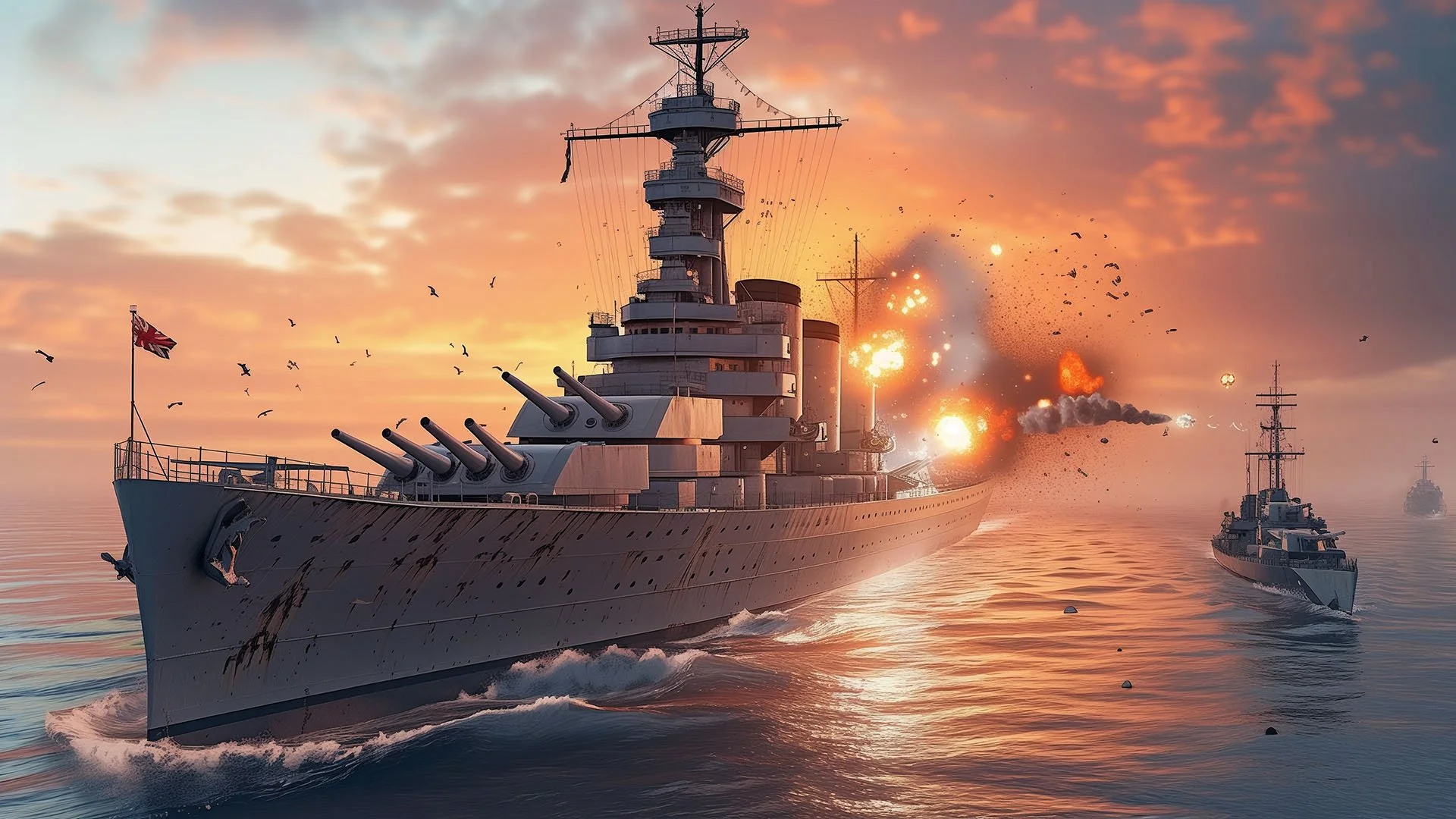
The Battles of the Mediterranean were a series of naval engagements fought in the Mediterranean Sea between the Allied and Axis navies during World War II. The Allies sought to maintain shipping lanes for resupply of their forces and operations in North Africa, Malta and the Middle East, which Axis naval forces, especially the Italian Regia Marina and the French Navy under the Vichy regime, threatened to close. Naval operations included the Attack on Mers-el-Kébir in July 1940 and the Attack on Taranto in November 1940, both preemptive strikes by the British Royal Navy against French and Italian naval forces respectively. In November 1942 American and British naval forces engaged Vichy French ships in the Naval Battle of Casablanca, part of Operation Torch to land Allied forces in North Africa; they cleared the seas of Axis naval forces and helped defeat the Axis in North Africa. Allied naval forces engaged in convoy escort, amphibious landings and operations with precise strategic attacks, achieving a dominant victory against Axis forces in the Mediterranean. Charles Jones' model ship collection as part of the Fleet of Freedom project includes the decisive victories and the lives that were lost in securing this area in the Battle of the Mediterranean.
Introduction to Mediterranean - Naval Battles in the Mediterranean Theater
The Mediterranean Theater of World War II was a large-scale area of operations that involved naval, land, and air campaigns fought in the Mediterranean Sea, North Africa, the Horn of Africa, and parts of the Middle East. It encompassed campaigns between 1940 and 1945 where the combatants fought to secure sea lanes for army supplies, defend their interests, and ultimately decide who would win the war. The Allies, also known as the “Fleet of Freedom” as they won the battles to become free from oppression and from those who believed in authoritarian ideas, fought alongside a number of independent and allied countries. The Mediterranean theater was considered important for the control of the sea lanes between Europe, Africa, and the Middle East. It was a strategic link between the North Atlantic Ocean and the Indian Ocean that used the key points of the Strait of Gibraltar, Suez Canal, and the island of Malta for control and movement of resources.
The primary naval forces were those of the Allied British Royal Navy, reinforced later by the United States Navy, opposed by the Italian Regia Marina, German Kriegsmarine (including U-boats), and the occasional involvement of Vichy French ships early on in the campaigns. The battles in the theater were a mix of amphibious landings, convoy battles, and direct fleet actions that tested naval doctrines, equipment, and the will to fight. The following article will examine the Mediterranean Theater naval battles with a focus on the Attack on Mers-el-Kébir and the Naval Battle of Casablanca.
Mediterranean ships
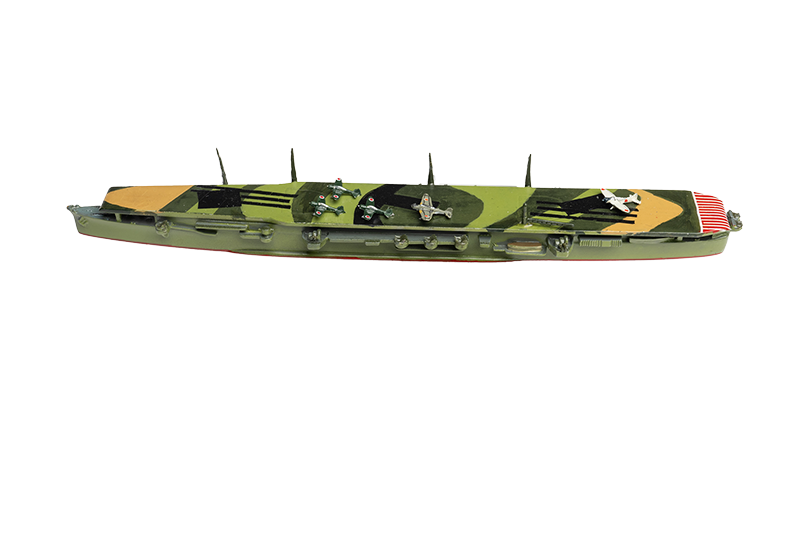
The battle againtst the Tirpitz centered on aircraft carriers where their support vessels and escorts played a decisive role in determining the battle's outcome. The following list summarizes the principal ships engaged in the battle as detailed by Chesneau, Whitley, and Bagnasco.




Early Naval Actions (1940-1941)
The Mediterranean Sea was soon declared as a place for naval battles when Italy joined the war on 10 June 1940. This allowed Benito Mussolini to challenge British control of the sea and create a “Mare Nostrum” (Our Sea), but the Royal Navy would not be so easily dominated and launched an effort to keep supplying Egypt and Malta from bases in Gibraltar and Alexandria. They would be able to claim success against the Italians despite being outnumbered at points.
The first engagement was the Battle of Calabria (Battle of Punto Stilo) which took place on 9 July 1940. The battle involved Italian and British ships exchanging shots as the Italians bombarded British-held positions in Calabria, Italy, while the British fleet circled back to its home ports. The battle did not have a decisive victor but showed the Royal Navy was not going to back down from the Italians. A more important engagement was the Battle of Taranto on the night of 11-12 November 1940. British carrier-based Swordfish aircraft ambushed the Italian fleet anchored in Taranto harbor and sank or damaged three battleships. The effect was a crippling of the Italian fleet which was considered as the influence for the Pearl Harbor attack. With Italy largely neutralized at sea, it became easier for the Allies to control the Mediterranean, as Italian influence in the Battle of Cape Matapan in March 1941 demonstrated.
In 1941, the Mediterranean battles focused on convoys as the Italian siege of Malta began. The British fortress was being bombed from the air day and night, and desperately needed convoys like Operation Excess and Operation Substance. These convoys were escorted heavily by Royal Navy ships, including battleships, cruisers, and destroyers. There was more German influence with Fliegerkorps X bombing the convoys in the sky, and German U-boats were also placed in the area to intercept the convoys. The British would not be outdone, however, with the Battle of Cape Matapan in March 1941. Using signals intelligence Ultra and superior radar, the British sank three Italian cruisers and two destroyers while the remaining ships retreated back to the safety of home. With victories such as Cape Matapan, it was more possible to get convoys through to sustain the North African campaign, which the Mediterranean naval battles supported directly by providing naval gunfire support in battles such as the Battle of Crete in May 1941. Despite heavy losses to German airpower in these operations, the battles were completed, and the Mediterranean theater was well under way.
The Attack on Mers-el-Kébir
One of the most infamous naval engagements that took place was the Attack on Mers-el-Kébir. It is one of the most polarizing moments in the Mediterranean theater of World War II for its ruthless exchange between British and French forces. On June 22, 1940, the French capitulated to the German invasion and armistice which made British Prime Minister Winston Churchill highly suspicious of the state of the French fleet. It was the fourth-largest in the world and could be used to aid the Axis if France changed sides. Operation Catapult was approved and targeted the French fleet at Mers-el-Kébir, which is located near Oran in Algeria.
British Force H, under the command of Vice Admiral James Somerville and including the battlecruiser HMS Hood, battleships HMS Valiant and HMS Resolution, aircraft carrier HMS Ark Royal, supported by cruisers and destroyers, arrived at the Algerian coast on July 3. Admiral Somerville met with French Admiral Marcel-Bruno Gensoul with an ultimatum to either join the Allies, sail to a neutral country and not return until the end of the war, demilitarize the ships, or scuttle the ships. The French admiral ultimately refused after negotiations as they were under strict orders from Vichy France to not let the ships fall to the British. Firing from 15,000 yards away at 5: 54 PM, British forces quickly sank or damaged French ships. The French battleship Bretagne was hit, exploded, and sank within minutes. Dunkerque and Provence were hit and beached. The battlecruiser Strasbourg and a few destroyers escaped with the assistance of aircraft from HMS Ark Royal, but Strasbourg managed to slip through as it took several torpedo hits and returned to France. The engagement only lasted 14 minutes and 30 seconds but French casualties were severe, with 1,297 killed and over 350 wounded.
The French were never the same with this attack as it caused ill will between the French and British and made Vichy propaganda heroes as well as caused frustration for those who wanted to join the Allies. Churchill even had to defend this before Parliament, stating that “until our worst fears were allayed, we should have no option but to fight on our own and at the end, perhaps be beaten.” In retrospective analysis, the Attack on Mers-el-Kébir gave the Fleet of Freedom a true grasp of what it was willing to do to the Mediterranean sea lanes.
Malta Convoys and the Siege of Malta
As Malta was an unsinkable aircraft carrier that would serve the Allies as a forward naval air base in the central Mediterranean, it was key to the Mediterranean sea lanes, and it became known as the Siege of Malta. The Royal Navy started convoys to resupply the island of Malta as it was being bombed from the air, starting the operation known as the Malta convoys. German and Italian forces fought hard to bomb as many convoys as possible such as Operation Substance, but they were too persistent and managed to outlast the siege with Operation Pedestal in August 1942. The convoy consisted of 14 merchant ships and was escorted by two battleships, four carriers, seven cruisers, and 44 destroyers. Only five ships managed to arrive at Valletta, but they carried fuel which was the most needed on the island. Innovation took place here with British forces using new radar for night-fighting and anti-submarine measures, while American forces sent over the carrier USS Wasp to make it a successful ferry mission.
Operation Torch and the Naval Battle of Casablanca
Operation Torch was the Allied invasion of French North Africa on 8 November 1942 which started as the US’s major entry into the Mediterranean theater. The operation involved over 100,000 US and British troops landing in French North Africa at Casablanca, Oran, and Algiers. Naval support was of great assistance, with naval fleets assisting in bombardment, transport, and protection against the French who were only resisting the allied forces. Naval support included several naval engagements, one of which was the Naval Battle of Casablanca.
The Naval Battle of Casablanca involved two main forces, with the United States forces under Rear Admiral Henry K. Hewitt and the Vichy French forces under Rear Admiral Gervais de Lafond. The US task force 34 included the battleship USS Massachusetts, heavy cruisers USS Wichita and USS Tuscaloosa, light cruiser USS Brooklyn, and several destroyers. They were also joined by aircraft carriers such as USS Ranger. The French forces were not shy as they also had the unfinished battleship Jean Bart (however, it was in the harbor and moored), light cruiser Primauguet, seven destroyers, and submarines. The Americans started landing their forces in Fedala at 08: 15 AM while French shore batteries and ships opened fire on the American ships. Massachusetts engaged Jean Bart at point-blank range with the American battleship hitting her. The French battleship responded by sending return fire and hitting Massachusetts, straddling her. The battleship exchange continued but Primauguet and French destroyers were spotted by reconnaissance aircraft. The ships then made a sortie towards the American invasion fleet but encountered heavy fire from the American naval and air power which eventually sank or damaged most of the French ships. This included Primauguet, which burned from being hit but managed to beach herself.
French losses were severe with over 460 French sailors killed in the battle. Jean Bart was disabled in the battle (she was later repaired), while several French destroyers were lost as well. American losses were light, with 174 being killed, and some of their ships damaged such as the destroyer USS Maddox, but it sunk one of the submarines and a destroyer, and damaged two more ships. The naval battle, which was the only naval clash between US and French forces, ended Vichy forces in Morocco by 11 November, so the Allied forces could concentrate on operations and move eastward.
Torch was a success as it sealed the Axis’s fate in Tunisia and also incorporated the Free French forces into the Allied command, which was the true example of the Fleet of Freedom’s multinational cooperation.
Invasion of Sicily and Italy (1943)
The success of Operation Torch led to the invasion of Sicily under Operation Husky on 10 July 1943 which involved over 3,000 ships, being the largest amphibious fleet at the time. The amphibious assault was supported by over 180,000 troops and was provided naval bombardments by many warships. The campaign finished with the successful evacuation of the Axis forces across the Strait of Messina with heavy Axis naval losses. In the following months, the Italian mainland was invaded, and on 9 September 1943, the Allied invasion began with Operation Avalanche at Salerno. The naval support involved was again crucial, as battleships such as HMS Warspite provided naval gunfire support. However, it also demonstrated a vulnerability to guided bombs as Warspite was severely damaged by Fritz-X bombs. The naval operations in the theater were also involved with the landings at Anzio in January 1944 which supported the troops with convoys while they were on the beachhead and linked to the land.
Later Operations and End of the War (1944-1945)
Naval supremacy in the Mediterranean theater in 1944 was solely in the hands of the Allied forces. Operation Dragoon was the Allied invasion of southern France in August 1944, and it involved over 800 ships and accelerated the Western European liberation. In the eastern Mediterranean, operations in support of the partisan campaign were in Greece and Yugoslavia, with destroyers and submarines attacking Axis supply lines. The naval campaigns of the Mediterranean theater came to an end with the surrender of remaining Axis forces in May 1945, which had cost thousands of lives in order to secure sea routes.
Strategic and Political Ramifications
The strategic and political implications of the campaigns in the Mediterranean Theatre of World War II were significant and far-reaching. Strategically, the Mediterranean campaign diverted Axis resources from more critical fronts during a pivotal phase of the war, especially for Germany. The campaigns in North Africa and Italy tied down divisions that might otherwise have been used in the Soviet Union or in a more robust defense against the D-Day landings in Normandy. The destruction of the Italian Empire and the elimination of Italy as an effective Axis power following Mussolini’s downfall in July 1943, after the landings in Sicily, not only removed a player but also provided a pathway for Allied forces into southern Europe, allowing for the eventual Allied advance into the Balkans and Austria. The Mediterranean also served as a proving ground for Allied amphibious assault tactics, which were honed during operations such as Torch and Husky and later applied during Overlord; it also enabled control of vital sea lanes, ensuring the flow of oil and materiel from the Middle East to Britain and the Soviet Union.
Politically, the Mediterranean campaigns highlighted the challenges of coalition warfare among the Allies, with occasional tensions between British and American strategic priorities. Churchill’s preference for the Mediterranean as the "soft underbelly" of Europe often contrasted with American strategic planners’ focus on a direct cross-Channel attack. These differences were navigated through high-level political and military discussions, resulting in pivotal conferences in Casablanca and Tehran in 1943, which not only set the stage for Mediterranean operations but also committed to a broad-based offensive to liberate Europe. Furthermore, the Torch operation facilitated the integration of Free French forces into the Allied command structure, and both Torch and Husky contributed to the development and support of anti-Axis resistance movements in occupied Europe, furthering the Allied strategic goals. The forceful measures taken against the French fleets at Mers-el-Kébir and Casablanca, while causing a diplomatic rift with France, underscored Britain’s determination to prevent its ships from falling into Axis hands, which arguably accelerated the collapse of Vichy France and bolstered the position of the Free French under Charles de Gaulle. The long-term geopolitical consequences of the Mediterranean campaigns also had implications for the early stages of the Cold War. By weakening Axis powers in North Africa and the Middle East, the Allies were better positioned to influence postwar settlements in these regions, countering Soviet expansion and securing Western strategic interests, such as access to the Suez Canal. However, the Italian campaign, in particular, has been criticized for its protracted nature and the significant resources it consumed, arguably delaying the overall Allied victory. As a result, it diverted attention and resources from other potentially decisive fronts.
Decision Matrix: tirpitz
| Strategic Decision | Decision-maker | Rationale | Outcome | Strategic Impact |
|---|---|---|---|---|
| Authorize attack on French fleet at Mers-el-Kébir (Operation Catapult) | Winston Churchill & British War Cabinet | - Prevent Vichy French fleet from falling into Axis hands - Maintain British naval superiority in Mediterranean - Demonstrate resolve after fall of France |
- French battleship Bretagne sunk, others damaged - 1,297 French killed, over 350 wounded - 2 British airmen killed |
- Neutralized potential threat from French navy - Strained Anglo-French relations but bolstered British position - Ensured continued Allied control of western Mediterranean |
| Launch carrier-based air raid on Taranto | Admiral Andrew Cunningham & Royal Navy | - Cripple Italian Regia Marina battleships in port - Reduce threat to British convoys and operations - Exploit aerial torpedo tactics for surprise attack |
- Three Italian battleships damaged or sunk - 59 Italian killed, approximately 600 wounded - 2 British aircrew killed, 2 captured |
- Shifted naval balance in favor of Allies - Inspired future carrier operations, including Pearl Harbor - Weakened Italian offensive capabilities in Mediterranean |
| Initiate Operation Torch with naval engagement at Casablanca | Franklin D. Roosevelt, Winston Churchill & Allied Combined Chiefs of Staff | - Open second front in North Africa against Axis - Secure Vichy French territories for Allied use - Support broader strategy to defeat Germany first |
- Vichy French fleet defeated, Jean Bart disabled - Over 460 French killed, around 200 wounded - Approximately 174 Americans killed, 400 wounded |
- Secured North African landings and Axis retreat - Integrated Free French into Allied forces - Paved way for victory in Tunisia and Italian campaign |
| Italian decision to declare war and pursue Mediterranean dominance | Benito Mussolini & Italian High Command | - Exploit fall of France for territorial gains - Establish "Mare Nostrum" control over Mediterranean - Align with Germany for quick victory |
- Initial advances but heavy naval losses in battles - Italian fleet largely neutralized by 1943 - Led to Mussolini's downfall after Sicilian invasion |
- Diverted Allied resources to Mediterranean theater - Ultimately weakened Axis position in Europe - Accelerated Italy's exit from the war |
Key Takeaways
The Mediterranean campaigns of World War II, as conducted by the Fleet of Freedom, provide several enduring lessons in military strategy, international relations, and the use of sea power in total war. The key takeaways from this theatre of operations include:
1. Naval supremacy is a force multiplier: The ability of the Allied Fleet of Freedom to project power through carrier strike groups, convoy escorts, and amphibious support operations was instrumental in land campaigns. This was evident in the resupply of Malta and the successful landings in North Africa and Italy.
2. The high cost of preemptive action: The decision to attack the French fleet at Mers-el-Kébir demonstrated the difficult choices leaders must make, balancing immediate diplomatic relations against long-term strategic security. It also highlights the importance of decisive leadership and the willingness to make unpopular decisions to ensure national security.
3. The necessity of integrating multinational forces: The success of operations in the Mediterranean was heavily dependent on Anglo-American cooperation, with the entry of the United States into the conflict via Torch significantly altering the strategic balance. This underlines the critical importance of unified command and shared intelligence (e.g., Ultra) in overcoming initial strategic and tactical disadvantages.
4. The human and material costs of war: The Mediterranean campaigns saw over a million casualties among all belligerents. This stark statistic is a somber reminder of war’s human cost but also demonstrates how sustained attrition, through sieges (Malta) and battles (Casablanca), can eventually wear down even the most formidable opponents.
5. Geopolitical shifts in the postwar world: The campaigns in the Mediterranean not only contributed to the Axis powers’ defeat but also had lasting effects on the postwar geopolitical landscape, influencing the early Cold War dynamics and the process of decolonization in North Africa and the Middle East.
| Battle | Allied Casualties | Axis Casualties | Civilian Deaths |
|---|---|---|---|
| Key Naval Battles in the Mediterranean (1940-1942) |
|
|
No significant civilian casualties reported |
final thoughts on THE mediterranean
The Mediterranean Theater’s naval battles were significant to the Allied victory, as the Fleet of Freedom was able to outlast the early naval battles and become better over time by building new alliances and emerging from the battles stronger than they came in. Battles such as Mers-el-Kébir and Casablanca were harsh as they helped block any opportunities for the neutral nations to join the Axis and open North Africa to Allied invasion, despite the bloodshed. This theater of war ended up sapping the Axis of their resources and creating the plans which would win the war in Europe, as a student of WWII naval history.